
WhatsApp Channel Join Now
Telegram Group Join Now
| Relevance: General Studies Paper III — Indian Economy: Government Budgeting, Subsidies, Agricultural Input Pricing, and Infrastructure (Ports & Logistics); with linkages to General Studies Paper II — Governance | Source: Press reports & official data, June 2026 |
India’s farms run on cheap fertiliser, and a large part of it comes from abroad. In 2026, a war in West Asia has squeezed global supply and pushed prices up sharply.
|
1 · Why fertiliser is a fiscal time-bomb
| The “3 Fs” — Fertiliser, Food and Fuel — are three goods India has to import in large amounts and pay for in dollars, not rupees.
Imported Inflation: When their (fertiliser, food and fuel) world prices rise, India spends more foreign currency, the rupee weakens, and the government’s subsidy bill climbs. |
- Import dependence: India makes most of its urea at home but still imports about a quarter to a third of it — and almost all of its potash — mainly from Gulf countries, Russia, Canada and Morocco. So a shock anywhere on this route reaches the Indian field quickly.
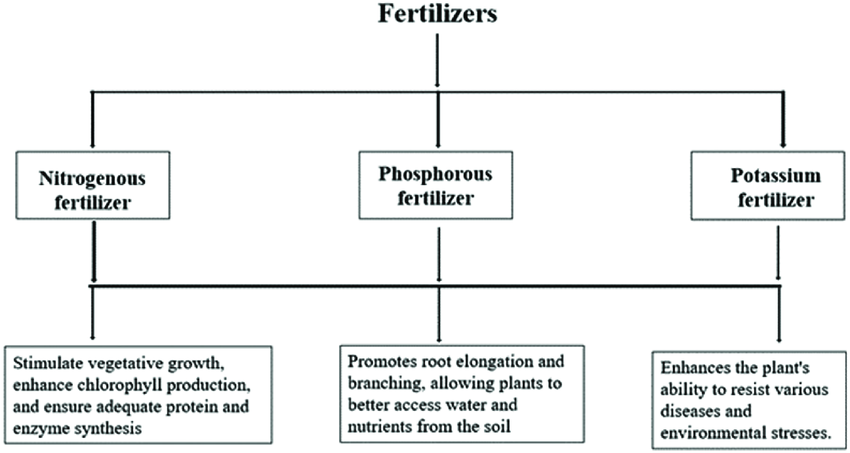
Image : Types and Composition of Chemical Fertilisers
- A fixed price meets a moving cost: Farmers pay a frozen price of Rs 242 for a 45-kg bag of urea — unchanged since 2018. But the real delivered cost of that same bag has now climbed to about Rs 3,500 (roughly Rs 78,000 a tonne). The government quietly pays the gap — today more than 90% of urea’s true cost. That payment is the subsidy.
- The dollar drain: Because these imports are paid for in dollars, costlier fertiliser also drags the rupee down, which then makes everything else India imports more expensive too.
2 · The crisis in four numbers
|
Rs 3.4 L Cr
the subsidy bill this year may double from the Rs 1.7 lakh crore (Budget Estimates)
|
~120%
rise in imported fertiliser prices in just three months — leading to Imported Inflation
|
~Rs 3,500
the production/imported cost of one urea bag (45 Kg) — the farmer pays just Rs 242
|
~1/3
of the world’s traded fertiliser moves through the Strait of Hormuz.
|
3 · Three layers of the crisis
A. The outside trigger — the West Asia conflict
- A choked sea lane: About one-third of the world’s traded fertiliser passes through the narrow Strait of Hormuz near Iran. Iran’s restrictions during the conflict have effectively closed this route, throwing normal shipping into disorder.
- Prices have shot up: International urea now costs about $935–$959 per tonne in India’s latest big import tenders — more than double the pre-war level of roughly $300–$420 per tonne.
- Hoarding tightens supply: Large exporters such as China are holding back stock as a war hedge. To cope, Indian state firms like National Fertilizers Ltd (NFL) and Indian Potash Ltd have floated fresh tenders and are turning to Russia.
B. The logjam at home — India’s ports
- A pile-up at western ports: Cargo meant for West Asia has been turned back to Indian ports like Jawaharlal Nehru Port (JNPT), Kandla and Mundra, jamming container yards beyond their capacity.
- Too few drivers: More than half the container-trailer drivers at JNPT have gone home for the harvest, holidays and out of war worry, so cargo boxes move slowly to Container Freight Stations (CFS).
- Predatory billing: Foreign shipping lines have used the chaos to add heavy, unclear charges — detention, demurrage and “War Risk Surcharges” — that eat into the earnings of Indian exporters.
C. The leak within — diversion and misuse
- Black-market diversion: Cheap, subsidised farm urea is being quietly sold to industry — to make plywood, resin and adhesives — where it fetches a far higher price.
- The over-allotment gap: Rules allow only one or two bags per farmer based on land records, but weak checks in some states let buyers take five to seven bags. This creates false shortages and feeds the black market.
4 · Way forward
| Make fair-shipping rules binding. The Ministry of Ports, Shipping and Waterways should turn the Directorate General of Shipping (DGS) advisory into a mandatory code with penalties, so foreign lines cannot impose unfair surcharges. |
| Track every bag digitally. A full Integrated Fertiliser Management System (iFMS) that links Point-of-Sale (POS) machines to a farmer’s actual crop need can block the leak of urea into industry at the source. |
| Spread out and de-risk imports. Long-term supply deals with Russia, Morocco and Saudi Arabia, plus more home-based production, reduce India’s dependence on a single chokepoint like the Strait of Hormuz. |
| Cut the need for chemical urea. Scaling up Nano Urea, bio-fertilisers and the PM-PRANAM scheme lowers import reliance, protects foreign-exchange reserves, and shrinks the subsidy bill over time. |
| India’s fertiliser shock shows how a distant war can reach both the farmer’s field and the national budget at the same time. Cheap food security has been built on costly, import-heavy inputs and a frozen price that hides the true bill. The lasting answer is not a bigger subsidy but a smarter mix — spread-out imports, digital leak-proofing, and a steady shift to home-grown, low-chemical soil nutrition. |
| UPSC Value Box | ||||||||||||||||
|
| Mains Practice Question |
| The recent fertiliser supply crisis has exposed deep links between global geopolitics, India’s fiscal stability and its farm-input policy. In this light, examine the structural reforms needed to make India’s fertiliser subsidy system both fiscally sustainable and farmer-friendly. (15 marks · 250 words) |
Structure hint:
Introduction — open with the projected Rs 3.4 lakh crore subsidy and the “3 Fs” vulnerability.
Body Part 1 — the outside trigger: Strait of Hormuz, the price surge, and import dependence.
Body Part 2 — the inside weaknesses: frozen urea price, urea kept out of NBS, diversion, and the port logjam.
Body Part 3 — the reform levers: iFMS tracking, a binding DGS code, and supplier diversification.
Way Forward — Nano Urea, bio-fertilisers, PM-PRANAM, and gradual price rationalisation of urea.
Introduction — open with the projected Rs 3.4 lakh crore subsidy and the “3 Fs” vulnerability.
Body Part 1 — the outside trigger: Strait of Hormuz, the price surge, and import dependence.
Body Part 2 — the inside weaknesses: frozen urea price, urea kept out of NBS, diversion, and the port logjam.
Body Part 3 — the reform levers: iFMS tracking, a binding DGS code, and supplier diversification.
Way Forward — Nano Urea, bio-fertilisers, PM-PRANAM, and gradual price rationalisation of urea.
Must mention:
The “3 Fs” ·
Nutrient Based Subsidy (NBS) ·
Strait of Hormuz ·
Integrated Fertiliser Management System (iFMS) ·
PM-PRANAM
The “3 Fs” ·
Nutrient Based Subsidy (NBS) ·
Strait of Hormuz ·
Integrated Fertiliser Management System (iFMS) ·
PM-PRANAM
Conclusion hint: Close by tying the answer to a balance of food security, farmer welfare and macroeconomic stability — reached through a smarter, leak-proof and more self-reliant fertiliser policy.



Start Yours at Ajmal IAS – with Mentorship StrategyDisciplineClarityResults that Drives Success
Your dream deserves this moment — begin it here.