
Syllabus: GS-I (Geography – Climatology), GS-III (Environment, Disaster Management, Climate Change), APSC GS Paper III & V
Why in the News?
The India Meteorological Department (IMD) has indicated the possible development of El Niño conditions during the current year. While Northeast India is expected to receive near-normal monsoon rainfall, experts warn that Assam may face severe heat stress due to the combination of high temperatures and extreme humidity, creating a significant public health challenge.
What is El Niño?
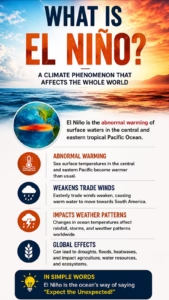
El Niño is a climate phenomenon characterized by the abnormal warming of sea surface temperatures in the central and eastern equatorial Pacific Ocean.
It is part of the El Niño-Southern Oscillation (ENSO) cycle, which influences weather patterns across the globe.
Key Features of El Niño
- El Niño develops when Pacific Ocean waters become warmer than the long-term average, disrupting normal atmospheric circulation.
- It usually develops during spring, peaks during winter, and gradually weakens over the following months.
- It affects rainfall, temperature, agriculture, fisheries, and disaster patterns across many regions of the world.
Why Should Assam Be Concerned?
- Unlike central and peninsular India, where El Niño often causes monsoon deficits, Assam generally receives near-normal rainfall during El Niño years. However, this does not mean the State remains unaffected.
- The greater concern for Assam is heat stress caused by high humidity.
Understanding Heat StressHeat Stress refers to the burden placed on the human body when it struggles to cool itself under hot and humid conditions. For example:
|
Why Assam is Vulnerable
- The Brahmaputra and Barak valleys naturally experience high humidity levels throughout summer.
- El Niño years are often associated with warmer-than-normal temperatures in Northeast India.
- The combination of heat and humidity can significantly increase health risks even when temperatures appear moderate.
Vulnerable Groups
The impacts of humidity-induced heat stress are likely to be most severe for:
- Tea garden workers, agricultural labourers, construction workers, and daily wage earners.
- Children, infants, pregnant women, and senior citizens.
- People suffering from cardiovascular, respiratory, or chronic illnesses.
Wider Impacts on Assam
- Public Health: Higher risk of heat-related illnesses, dehydration, heat exhaustion, and heat stroke.
- Increased mortality among vulnerable populations.
- Agriculture: Crop stress, reduced productivity, and changing growing conditions.
- Increased water demand for agriculture.
- Urban Areas: Rapid urbanisation has created urban heat islands in cities such as Guwahati.
- Concrete structures absorb and retain heat, worsening discomfort and health risks.
- Climate Change Link: Scientific studies indicate that extreme El Niño events may become more frequent under global warming.
- Future summers in Assam may become hotter and more humid if adaptation measures are not adopted.
What Should Assam Do?
- The Assam State Disaster Management Authority should strengthen heat action plans, early warning systems, and public awareness campaigns.
- Healthcare facilities should prepare for heat-related illnesses during peak summer months.
- Cities should increase green spaces, improve urban planning, and promote climate-resilient infrastructure.
- Community-level awareness on hydration, workplace safety, and heat protection should be expanded.
- Long-term climate adaptation strategies must be integrated into development planning.
Exam Hook: Key Takeaways
- El Niño is associated with abnormal warming of the Pacific Ocean.
- Assam may receive normal rainfall during El Niño years but can face severe heat and humidity stress.
- Heat Index is often a better indicator of human discomfort than temperature alone.
- Climate change may increase the frequency and intensity of future El Niño events.
Mains Question
Although El Niño does not always reduce rainfall in Northeast India, it poses serious challenges to Assam. Discuss its impacts on public health, urban development, and climate resilience.
One-Line Wrap
For Assam, the greatest danger from El Niño is not drought but the growing threat of extreme heat and humidity, which can silently evolve into a major public health and climate challenge.



Start Yours at Ajmal IAS – with Mentorship StrategyDisciplineClarityResults that Drives Success
Your dream deserves this moment — begin it here.