
WhatsApp Channel Join Now
Telegram Group Join Now
| Relevance: GS Paper I (Geophysical Phenomena); GS Paper III (Disaster Management, Environment) | Source: MZ CREATIVE HUB | Environmental & Disaster Reviews, 2026 |
| Imagine a massive block of heavy ice clinging to the edge of a steep mountain cliff, sitting far above a river valley. This is called a “hanging glacier.” Due to global warming, these giant ice blocks are melting and becoming dangerously weak. When they finally break and fall, they act like natural bombs, triggering a deadly chain reaction that ends in devastating flash floods downstream. With the recent tragedy in Nepal, and the painful memories of Kedarnath (2013), Chamoli (2021), and Sikkim (2023) still fresh in our minds, India’s disaster management teams are on maximum alert. |
1 · The Context
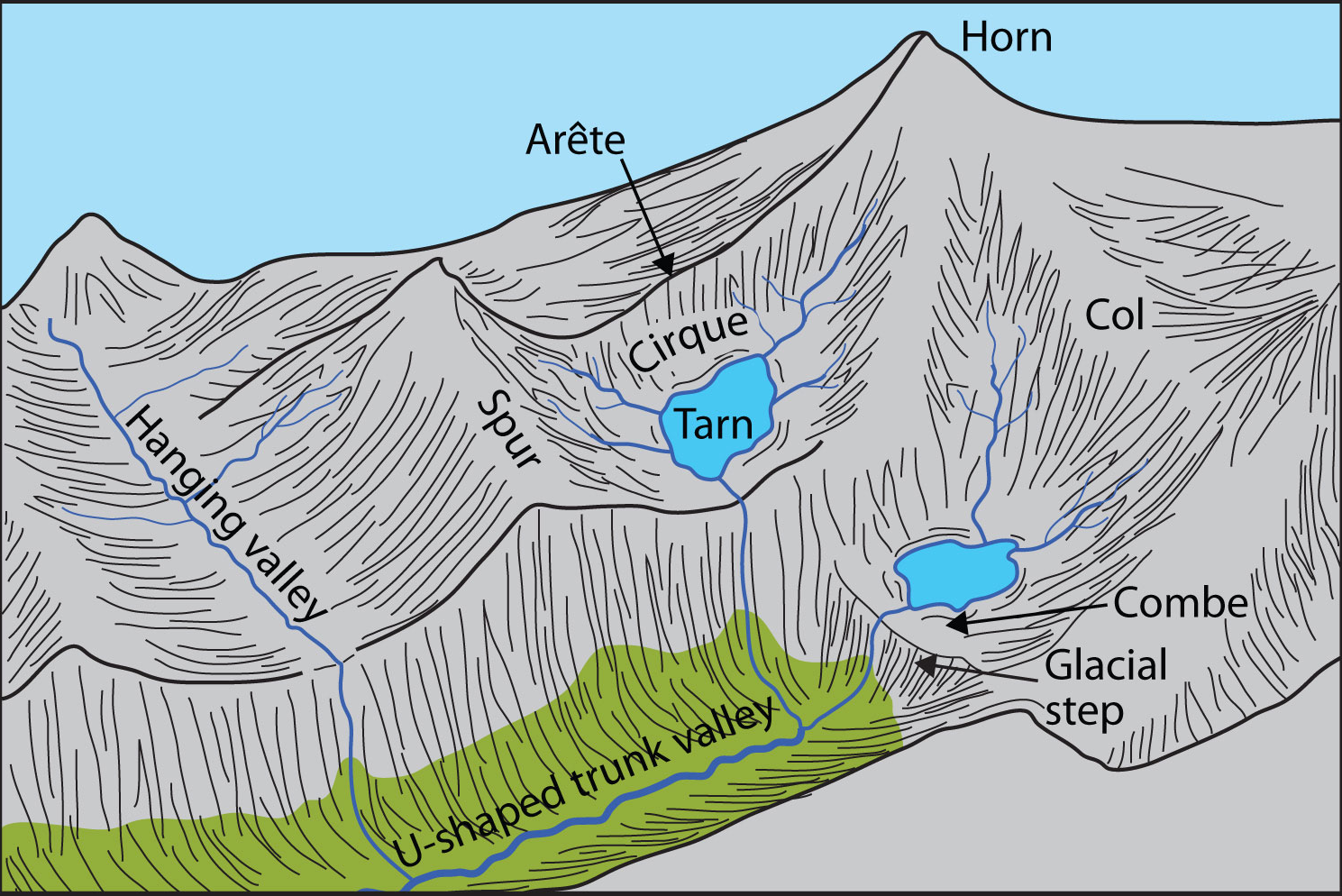
| What is a Hanging Glacier? Unlike normal glaciers that flow smoothly down a valley, hanging glaciers are highly unstable ice bodies that get stuck high up on a steep mountain wall. They do not reach the valley floor gently; instead, they break off abruptly. |
- Recently, a devastating flash flood struck Nepal, destroying villages and claiming lives. The National Disaster Management Authority (NDMA) of India is currently conducting a deep study of this event because it was triggered by the sudden collapse of a hanging glacier.
- India shares the exact same fragile Himalayan ecosystem. The recurring disasters in our own backyard—from the Dharali floods to the Sikkim lake burst—prove that our mountain states are standing on the frontlines of a climate crisis. Understanding what happened in Nepal is crucial to saving lives in India.
2 · The Chain Reaction of a Disaster
How does a block of ice cause a massive flood? It happens through a terrifying chain reaction (a “cascading hazard”):
|
Step 1
The Massive Drop
Satellite evidence shows that a gigantic chunk of snow and rock broke off and fell vertically for 1.5 to 2 kilometres into the empty valley below.
|
Step 2
The “Bomb Blast” Impact
When millions of tonnes of ice hit the ground from that height, the energy released was so huge that scientists compared it to a “high-intensity bomb blast.” It actually created a 5.2 magnitude earthquake signal!
|
Step 3
The Blockage & Burst
This fallen ice temporarily blocked the local river, acting like a dam. When the trapped water pressure finally broke through this ice-dam, it unleashed a catastrophic flood of mud and debris downstream.
|
3 · India’s Growing Vulnerability
A. Expanding Glacial Lakes
- The danger is growing every year. In April 2024, the Indian Space Research Organisation (ISRO) released terrifying data. Out of 2,431 large glacial lakes in the Indian Himalayas, 676 lakes have expanded notably between 1984 and 2023. More water means a higher risk of these lakes bursting (GLOFs) when hit by falling ice.
B. Extreme Climate Sensitivity
- Hanging glaciers are uniquely sensitive to climate change. As temperatures rise, the ice physically weakens (thermal weakening).
- This transforms our high-altitude mountains into ticking time bombs, where a simple ice-rock avalanche can quickly turn into a deadly fluid mudslide that wipes out entire towns.
4 · Way Forward: How is India Protecting Its People?
| National GLOF Risk Management Programme. Started after the tragic 2021 Chamoli disaster, this central programme actively works to strengthen the fragile boundaries of glacial lakes and install Early Warning Systems (EWS) to alert downstream villages. |
| Securing the Himalayan Belt. The NDMA is not just focusing on one state. This protective programme covers the entire vulnerable belt: four states (Arunachal Pradesh, Sikkim, Uttarakhand, and Himachal Pradesh) and two Union Territories (Jammu & Kashmir, and Ladakh). |
| Integrated Forecasting. Since an ice fall causes landslides and floods, the NDMA is working on a combined forecasting system. By using advanced satellite radars, they aim to predict both slope instability and lake bursts at the same time. |
| The mighty Himalayas are beautiful but fragile. As global warming increases the risk of hanging glacier collapses, we can no longer rely on traditional disaster response. India must aggressively invest in space-based technology and early warning systems to predict these “cascading disasters” before they strike, ensuring the safety of millions living in the valleys below. |
| Value Box (Key Geographical & Institutional Terms) | ||||||||
|
| Mains Practice Question |
| “The increasing frequency of hanging glacier collapses and Glacial Lake Outburst Floods (GLOFs) highlights the severe climate vulnerability of the Himalayan ecosystem.” Discuss the cascading mechanisms of these disasters and evaluate India’s institutional response through the NDMA. (15 marks · 250 words) |
Structure Hint:
Introduction — Define hanging glaciers and mention recent tragedies (Nepal, Chamoli, Sikkim) to show the increasing frequency of such cryosphere disasters.
Body Part 1 (The Cascading Mechanism) — Explain the chain reaction: a massive ice/rock drop (kinetic energy causing seismic shocks) → temporary damming of a river → massive buildup of pressure → catastrophic burst and downstream debris flow.
Body Part 2 (Institutional Response) — Mention ISRO’s monitoring of expanding lakes. Highlight the NDMA’s National GLOF Risk Management Programme (covering the 4 states and 2 UTs of the Himalayan belt) and the push for Early Warning Systems.
Way Forward/Conclusion — Conclude that integrating space technology (SAR) and ground sensors is vital to predict these multi-hazard events and protect downstream populations.
Introduction — Define hanging glaciers and mention recent tragedies (Nepal, Chamoli, Sikkim) to show the increasing frequency of such cryosphere disasters.
Body Part 1 (The Cascading Mechanism) — Explain the chain reaction: a massive ice/rock drop (kinetic energy causing seismic shocks) → temporary damming of a river → massive buildup of pressure → catastrophic burst and downstream debris flow.
Body Part 2 (Institutional Response) — Mention ISRO’s monitoring of expanding lakes. Highlight the NDMA’s National GLOF Risk Management Programme (covering the 4 states and 2 UTs of the Himalayan belt) and the push for Early Warning Systems.
Way Forward/Conclusion — Conclude that integrating space technology (SAR) and ground sensors is vital to predict these multi-hazard events and protect downstream populations.



Start Yours at Ajmal IAS – with Mentorship StrategyDisciplineClarityResults that Drives Success
Your dream deserves this moment — begin it here.