
WhatsApp Channel Join Now
Telegram Group Join Now
| Relevance: GS Paper III — Biodiversity, Conservation, Invasive Species | Source: Isaac Conservation Trust / press reports, June 2026 |
1 · What happened
| Two critically endangered orange-fronted parakeets — Nacho and Trixie — housed at the Isaac Conservation and Wildlife Trust, Christchurch (New Zealand), have produced 55 chicks in two years. This single pair has lifted the entire global population by more than 10%.
Only about 450 birds of the species (Cyanoramphus malherbi, locally called kākāriki karaka) survive in the wild and in captivity combined. The bird was declared extinct twice — in 1919 and 1965 — and rediscovered later in remote South Island valleys. Captive breeding began in 2003 and is now run in partnership with the Māori tribe Te Rūnanga o Ngāi Tahu. |
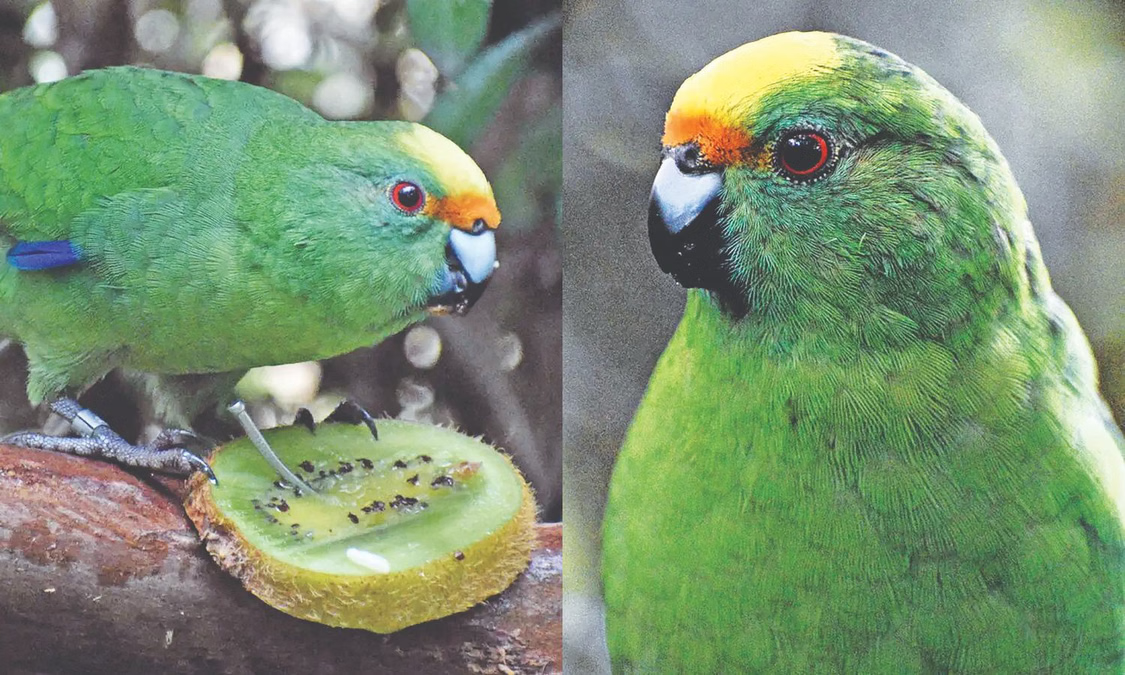
Image : The Parakeet Pair
2 · Why island birds are so fragile — and how we save them
| Island biogeography: Long isolation produces highly endemic species (flightless birds, ground nesters) that evolved without mammalian predators. The arrival of even one invasive predator can collapse the population — making ex-situ + in-situ recovery essential. |
|
The Species Anchor
Kākāriki karaka
Cyanoramphus malherbi. Critically Endangered (IUCN). Endemic to alpine beech forests of South Island. Nests in tree cavities — easy prey for climbing predators.
|
Conservation Recovery
Ex-situ + In-situ synergy
Wild eggs reared in captivity; chicks released into predator-free fenced sanctuaries and offshore islands. 5 wild populations now; target 10 within two decades.
|
|
The Crucial Mechanism
Beech “masting” cycle
Every few years beech trees release seeds in huge synchronised pulses (masting). This triggers a rodent population boom, which devastates parakeet eggs and chicks.
|
The Root Threat
Invasive Alien Species (IAS)
Human-introduced rats, stoats, ferrets, possums raid nests. Add habitat degradation, disease and climate change — and a defenceless endemic species nearly disappears.
|
- Endemism statistic: New Zealand has 206 breeding bird species; 94 are endemic. Long isolation produced unique traits like flightlessness in the kiwi and kakapo.
- India parallels: Captive breeding of the Great Indian Bustard (GIB) at Desert National Park, Rajasthan; the Pygmy Hog Conservation Programme in Assam reintroducing animals to the wild.
- Community integration: Just as the Ngāi Tahu Māori partner conservation, India embeds forest-dwellers under the Forest Rights Act, 2006 — e.g., Maldharis of Gir, Baigas of Kanha.
| UPSC Value Box | ||||||||||||||||
|
| MCQ Practice Question |
Q. With reference to species conservation, consider the following statements:
Which of the statements given above is/are correct? |
Answer: (c) 1 and 3 only
|



Start Yours at Ajmal IAS – with Mentorship StrategyDisciplineClarityResults that Drives Success
Your dream deserves this moment — begin it here.