
WhatsApp Channel Join Now
Telegram Group Join Now
What & where:
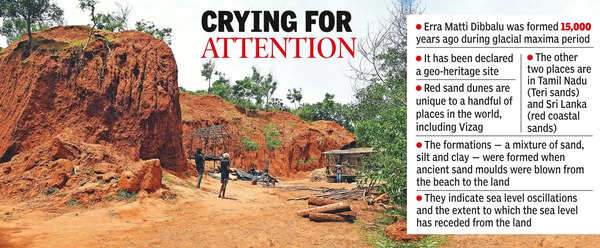
Erra Matti Dibbalu—“red sand hills” in Telugu—are striking coastal dunes along the Visakhapatnam–Bheemunipatnam (Bheemili) Beach Road in Andhra Pradesh. Deep gullies, cliffs and ravines cut through rust-coloured sands right by the Bay of Bengal.
Why special:
- Natural “history book” of the coast: layered sands record past sea-level and monsoon changes (late Quaternary).
- Red colour comes from iron-rich sediments oxidising.
- Already notified as a National Geo-heritage Monument; used as an outdoor lab for students and scientists.
The news: The site has been added to India’s UNESCO Tentative List for Natural Heritage— the mandatory first step before a full World Heritage nomination.
Why this matters:
- Focuses national attention on protection and research.
- Triggers preparation of a nomination dossier (boundaries, threats, management plan).
- Can boost responsible geotourism and local livelihoods.
Current risks:
Unregulated footfalls and filming, construction pressure nearby, littering, and natural erosion.
What protection should look like:
- Clear no-build and buffer zones
- Boardwalks/viewpoints to limit trampling
- Waste control & signage; guided trails
- Regular erosion monitoring and school/community stewardship
Exam flash: Location—Vizag–Bheemili coast; landform—red coastal dunes; value—Quaternary climate/sea-level record; status—UNESCO Tentative List + Geo-heritage Monument.
One-line wrap: A fragile coastal archive in red sand, now a step closer to global recognition.



Start Yours at Ajmal IAS – with Mentorship StrategyDisciplineClarityResults that Drives Success
Your dream deserves this moment — begin it here.