
Syllabus: GS: III & V: Internal Security
Why in the news?
Recent anti-India rhetoric, security threats, and political instability in Bangladesh have raised serious concerns about their spillover impact on India’s Northeast, prompting renewed focus on border security, internal stability, and regional geopolitics.
The evolving security concern
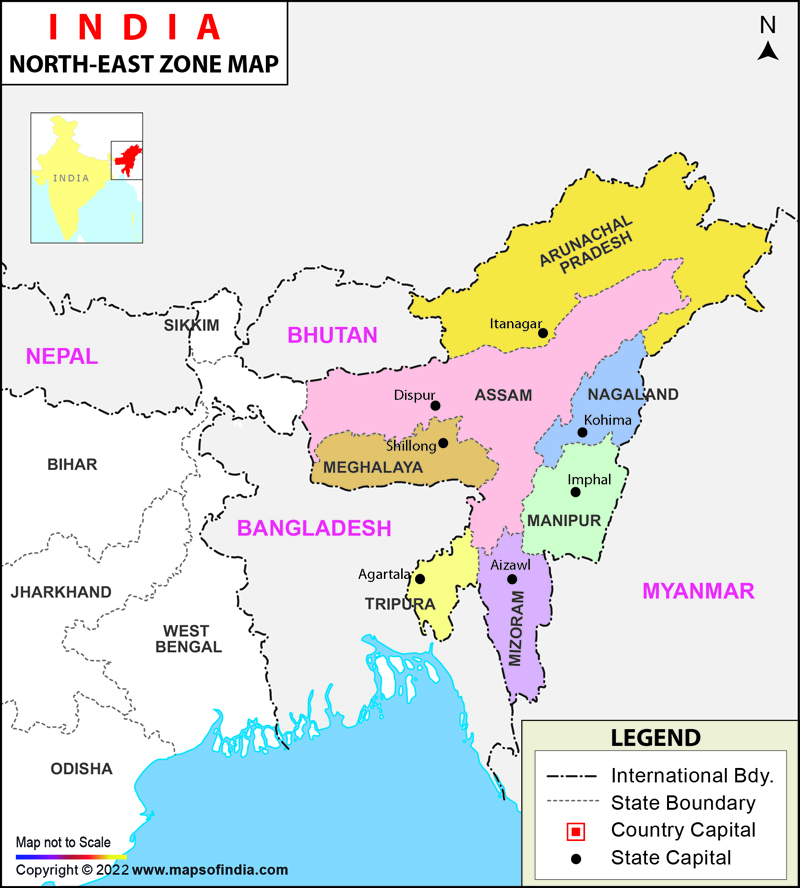
- India’s Northeast shares long, porous borders with Bangladesh, making it highly sensitive to political and security developments across the border.
- Repeated anti-India statements by radical elements in Bangladesh and threats to target Indian interests have moved beyond rhetoric and demand strategic attention.
- India has witnessed past instances where instability in Bangladesh created security challenges, including illegal migration, insurgent shelter, and cross-border networks.
Key security dimensions
- Cross-border radicalisation:
- Reports indicate that extremist rhetoric and activities in Bangladesh may embolden anti-India groups, particularly those targeting Assam and other Northeastern states.
- Illegal migration and demographic stress:
- Continuous inflow of undocumented migrants creates social, economic, and political pressure, especially in border districts of Assam and Tripura.
- Insurgency and terror networks:
- Past experience shows that insurgent groups in the Northeast have exploited political instability in Bangladesh for shelter and logistics.
- Strategic vulnerability of the Northeast:
- The region is geographically narrow, ethnically diverse, and strategically crucial, sharing borders with Bangladesh, Myanmar, Bhutan, and China.
India’s official response
- The Ministry of External Affairs has clarified that India closely monitors developments in Bangladesh and expects responsible behaviour from its neighbour.
- India has reiterated that it is a nuclear-armed state and will not tolerate threats to its sovereignty or internal security.
- Security agencies have intensified vigilance along borders and within sensitive districts.
Why Bangladesh’s stability matters
- A stable and democratic Bangladesh has historically cooperated with India on counter-insurgency and border management.
- Periods of instability in the past, especially during military or radical regimes, coincided with rise in insurgency and illegal activities affecting Assam and the Northeast.
- Strengthening democracy and stability in Bangladesh aligns with India’s long-term regional security interests.
Strategic imperatives for India
- Strengthening border management through technology, fencing, and coordinated patrols.
- Robust internal security mechanisms to prevent radicalisation and infiltration.
- Diplomatic engagement with Bangladesh to discourage extremist narratives.
- Socio-economic development in the Northeast to reduce vulnerability to destabilising forces.
About Bangladesh
|
Exam Hook
Key Takeaways
- Internal security of the Northeast is inseparable from stability in neighbouring countries.
- Border management alone is insufficient without diplomacy and regional cooperation.
- Development and security must move together in sensitive border regions.
Mains Question (One-line)
Discuss how political instability in neighbouring countries can impact India’s internal security, with special reference to the Northeast.
One-line Wrap:
For India, safeguarding the Northeast is no longer just a regional concern but a strategic imperative shaped by cross-border politics, internal stability, and national security priorities.



Start Yours at Ajmal IAS – with Mentorship StrategyDisciplineClarityResults that Drives Success
Your dream deserves this moment — begin it here.