Polity, Governance, Election Commission of India, Current Affairs, and Public Administration.
What is happening, where
Bihar is running a Special Intensive Revision of electoral rolls across the state. The stated aim is to clean duplicates, delete names of the deceased or shifted voters, and add first-time voters before the next election cycle. Many parties, observers and civil groups say the exercise looks rushed and not fully aligned with the Commission’s own manuals. Their worry: genuine voters may be dropped because the ground process is thin while the data process is heavy.
What is a Special Intensive Revision (SIR)?
Plain meaning: A Special Intensive Revision is a full, extra round of roll verification when the normal annual revision is not enough—for example, after large migration, natural disaster, past roll errors, or very low coverage.
Where it comes from:
- The Representation of the People Act, 1950 (especially Sections 15–23).
- The Registration of Electors Rules, 1960.
- The Commission’s manuals, which lay down how to revise rolls.
What should normally happen
- House-to-house visit by the booth officer to check each address.
- Draft roll displayed at every polling station and online.
- A full 30-day window for citizens to file forms:
- Form 6 (new entry)
- Form 7 (objection or deletion)
- Form 8 (correction)
- Form 6 (new entry)
- The electoral registration officer must pass a speaking order on each form (short written reasons).
- Special camps on weekends for walk-in help.
- Final roll after hearing objections and appeals.
Non-negotiable safeguards
- No bulk deletion.
- No deletion without notice and field verification.
- Every action must be traceable and auditable.
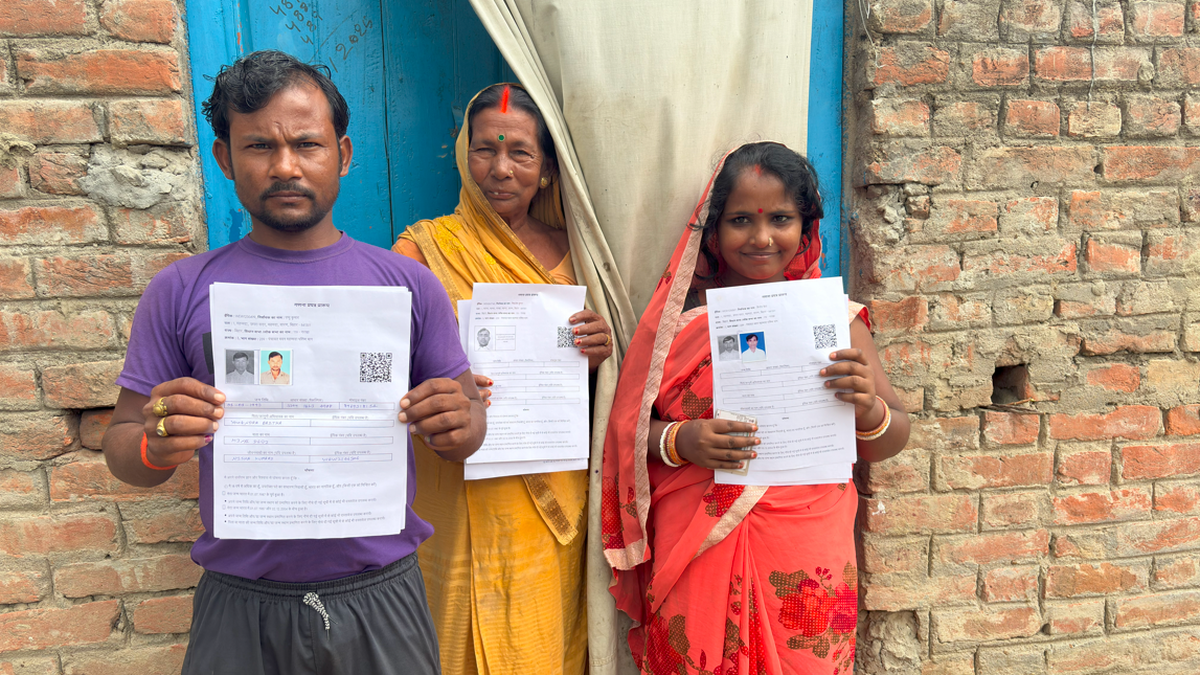
Why now in Bihar — and why the timing is questioned
Official view: Improve “roll purity”, bring in young voters, and fix mapping of polling areas.
Concerns about timing: Monsoon travel, festival season, university exams, harvest work and large inter-state migration make doorstep verification harder. If the calendar is tight, the risk rises that students, migrants, tenants and urban poor will miss the claim window or fail to meet the booth officer.
What are the main issues being flagged?
1) Process departures
- Compressed timelines for house visits and for the claims-and-objections period.
- Mass deletions triggered by databases (death lists, Aadhaar matching, duplicate finders) before a human visit or citizen notice.
- Treating Aadhaar or other identity numbers as if compulsory, though linkage is voluntary and cannot be a ground for denial.
- Extra data teams or private hands working outside the chain of the booth officer, causing gaps in responsibility.
- Online-first workflow without strong assisted counters—tough for citizens who need paper help.
2) Transparency gaps
- Draft rolls not displayed everywhere or not updated in time.
- Fewer weekend camps; weak publicity in local languages.
- Non-speaking orders on deletions (people learn too late that their names are gone).
- Little space for social audit by civil groups and local bodies.
3) Equity risks
Groups that move frequently or have low documents are hit first: women who shift after marriage, seasonal migrants, hostel students, homeless citizens, and denotified or nomadic communities. Big address changes (slum relocation, urban redevelopment) are often not synced with polling-station lists.
What do courts and stakeholders keep saying?
- Free and fair elections need accurate, inclusive rolls. The Commission has wide powers, but it must act under the Act and the Rules it framed.
- No deletion without notice and field verification. Databases can start a lead, but ground confirmation is compulsory.
- Identifiers like Aadhaar are voluntary. Lack of Aadhaar cannot be used to refuse enrolment or to delete a name.
- Political parties and civil society demand longer claim windows, weekend camps, and independent observers, warning that a hurried revision can look like voter suppression by mistake.
The right way to do it (simple checklist you can remember)
Calendar and outreach
- Give the full 30-day claim period; hold two rounds of weekend camps at every booth.
- Avoid peak monsoon weeks, key exam dates and harvest peaks.
- Publicity in local languages through schools, colleges, anganwadis, municipal offices, bus stands and community radio.
Verification and orders
- Booth officer first, database later. Use data matching only as a lead.
- Doorstep verification and written notice before any deletion.
- Speaking orders on Forms 6, 7 and 8, with a copy sent by text message and posted at the booth.
- Zero bulk deletions; each removal must be name-wise and address-wise with proof.
Inclusion tools
- Targeted drives for women who moved after marriage, students in hostels, migrants at worksites, and persons with disabilities.
- Mobile camps at labour nakas, factories, bus stations, shelters and campuses.
- Home visit options for elderly and bedridden voters.
Technology with guardrails
- Bilingual forms, assisted e-kiosks, and live status trackers for applications.
- Daily dashboards: forms received, accepted, rejected with reasons.
- Strict data-protection rules: access logs and no use of roll data for non-election work.
Independent checks
- Random back-checks by observers and social audit days so doubtful deletions can be corrected before the final list is frozen.
Lessons learned (from past messy revisions)
- Speed without safeguards creates wrongful deletions that are impossible to fix on polling day.
- Public display and weekend camps are the most effective inclusion tools.
- Data matching is useful only when verified on the ground.
- A good booth officer often decides the quality of the roll more than any central software.
Exam hook
Key takeaways
- Special Intensive Revision is legal and useful, but process discipline is non-negotiable.
- No bulk deletion; every deletion needs notice and doorstep verification.
- Timing matters—avoid seasons when citizens are least available.
- Technology must assist, not exclude; publish dashboards and orders.
- Independent checks and weekend camps give quick, low-cost gains.
Mains practice question
“Special Intensive Revision can improve roll purity but can also cause wrongful exclusions if rushed. Using the Bihar experience, design a legally sound, inclusion-first model for voter-roll revision.”
One-line wrap
Clean voter rolls come from patient, door-to-door verification—never from fast, bulk deletions on a screen.
Share This Story, Choose Your Platform!
Start Yours at Ajmal IAS – with Mentorship StrategyDisciplineClarityResults that Drives Success
Your dream deserves this moment — begin it here.