

Syllabus: GS–III & V: Biodiversity
Why in the news?
India has rolled out the second nationwide survey of river and estuarine dolphins, building on the first pan-India assessment conducted during 2021–2023. The exercise goes beyond population counting and focuses on habitat conservation, especially for the Gangetic river dolphin, locally known as Xihu in Assam.
About the Survey
- The previous survey estimated 6,327 river dolphins, including 6,324 Gangetic river dolphins across Ganga and Brahmaputra river basins and 3 Indus river dolphins in Beas river basin in Punjab.
- Assam records the 4th highest number (UP, Bihar, West Bengal) of riverine dolphins, with 635 individuals in its 5 rivers.
- The Brahmaputra river system recorded 635 Xihu, with 584 in the Brahmaputra mainstream and 51 in its tributaries such as Subansiri (22), Kulsi (20), Kopili (5), and Beki (4).
- The previous survey identified several critical areas within Assam where dolphin populations remain significant. These include:
- Kulsi (Kamrup district) Subansiri (Lakhimpur district) Brahmaputra (Majuli and Guwahati) Dibru-Saikhowa NP (Tinsukia district) Kaziranga NP (Biswanath district) Goalpara-Bongaigaon stretch of the Brahmaputra Dhubri region.
- The Barak river was identified as a coldspot ( Areas with Low or No Dolphin Presence) in Assam.
- The ongoing survey also includes the Irrawaddy dolphin found in the Sundarbans and Odisha, expanding India’s dolphin conservation canvas.
- As a top predator and indicator species, Xihu reflects the overall health of river ecosystems.
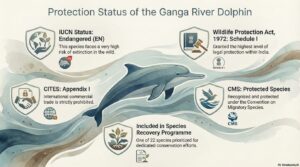
Key Threats to Xihu in Assam
- Indiscriminate and illegal sand mining, especially in the Kulsi River, is degrading breeding and migration habitats.
- Large infrastructure projects, including dams on the Subansiri and unplanned bridges, disrupt river flow and create acoustic barriers that interfere with dolphin echolocation.
- Dredging and increased inland water transport raise risks of vessel collision, underwater noise, and decline in fish populations.
Why Habitat Restoration Matters
- Restoring Xihu habitats also revives river fisheries, directly benefiting traditional fishing communities.
- Healthy tributaries help recharge wetlands, improve fish diversity, and reduce Assam’s dependence on imported fish.
- Conservation projects can discourage fishermen from shifting to illegal sand mining by restoring sustainable livelihoods.
Government Frameworks and Initiatives
- Project Dolphin was launched on 15 August 2020 under the Development of Wildlife Habitats scheme by the Ministry of Environment, Forest and Climate Change.
- The project aims to conserve riverine and marine dolphins through scientific research, habitat protection, and community participation.
- Vikramshila Gangetic Dolphin Wildlife Sanctuary, Bihar is India’s only dedicated dolphin sanctuary.
- It is located along the Ganga River in Bhagalpur district.
- The Gangetic river dolphin was declared India’s National Aquatic Animal on 5 October 2009.
- The day is observed as National Ganga River Dolphin Day.
- India’s first National Dolphin Research Centre (NDRC) was inaugurated in Patna, Bihar.
Scientific and Policy Priorities
- Long-term behavioural and habitat studies are needed to assess the cumulative impact of bridges, dredging, and vessel traffic.
- Environmental impact assessment funds from inland waterway and bridge projects can be channelled into dolphin research.
- Fishery development funds can support dolphin monitoring, creating a win–win for biodiversity and livelihoods.
Important Terms Explained
- Xihu: Local Assamese name for the Gangetic river dolphin.
- Indicator species: A species whose presence reflects ecosystem health.
- Echolocation: Navigation method using sound waves, crucial for river dolphins.
- Sand mining: Extraction of sand from riverbeds, often harmful when unregulated.
- Inland waterways: Rivers used for cargo and passenger transport.
- Habitat fragmentation: Breaking of continuous habitats due to human activity.
The Road Ahead
- Data from the second survey will help draft a Xihu Conservation Blueprint for the Brahmaputra basin.
- Integrating science, community participation, and infrastructure planning is essential to ensure that development does not come at the cost of Assam’s iconic river mammal.
Exam Hook
Key takeaway: Conserving Xihu is not only about saving an endangered species but about restoring river ecosystems, fisheries, and livelihoods in Assam.
Mains Question:
Discuss how conservation of the Gangetic river dolphin can serve as a tool for sustainable river basin management in the Brahmaputra system.
Share This Story, Choose Your Platform!
Start Yours at Ajmal IAS – with Mentorship StrategyDisciplineClarityResults that Drives Success
Your dream deserves this moment — begin it here.