

Relevance: GS-3 (Energy, Technology); Source: The Hindu, Rockefeller Foundation Report
Context
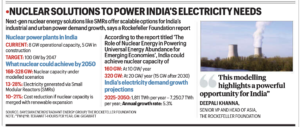
India’s rising electricity demand has revived focus on nuclear energy as a stable, low-carbon baseload source.
Types of Nuclear Reactors
|
Reactor Type |
Key Features |
| Pressurised Heavy Water Reactor (PHWR) | India’s primary reactor type; uses natural uranium + heavy water moderator; forms backbone of India’s 3-stage programme. |
| Fast Breeder Reactor (FBR) | Produces more fuel than it consumes; essential for India’s thorium roadmap; uses plutonium-uranium mix. |
| Advanced Heavy Water Reactor (AHWR) | Designed to use thorium fuel; high inherent safety; symbol of India’s long-term self-reliance. |
| Molten Salt Reactor (MSR) (emerging) | Uses liquid fuel; high temperature & efficiency; suitable for next-gen small modular reactors. |
Nuclear power offers reliable baseload electricity, reduces dependence on fossil fuels, and supports India’s long-term clean-energy targets.
Q. Consider the following statements about nuclear reactors in India:
- Pressurised Heavy Water Reactors use natural uranium and heavy water as both moderator and coolant.
- Fast Breeder Reactors are designed to utilise thorium as the primary fuel.
- Advanced Heavy Water Reactors are part of India’s long-term plan to shift towards thorium-based energy.
Which of the above statements is/are correct?
(a) 1 only
(b) 1 and 3 only
(c) 2 and 3 only
(d) 1, 2 and 3
Answer: (b)
Share This Story, Choose Your Platform!
Start Yours at Ajmal IAS – with Mentorship StrategyDisciplineClarityResults that Drives Success
Your dream deserves this moment — begin it here.