

Relevance: GS Paper III – Environment & Ecology; Source: Nature Reviews Biodiversity
A recent study highlights that the biodiversity inside mangrove ecosystems—trees, fish, crabs, molluscs, microbes—directly strengthens key ecosystem services such as carbon storage, shoreline protection, and fisheries support.
And climate change and sea-level rise threaten these biodiversity-driven functions.
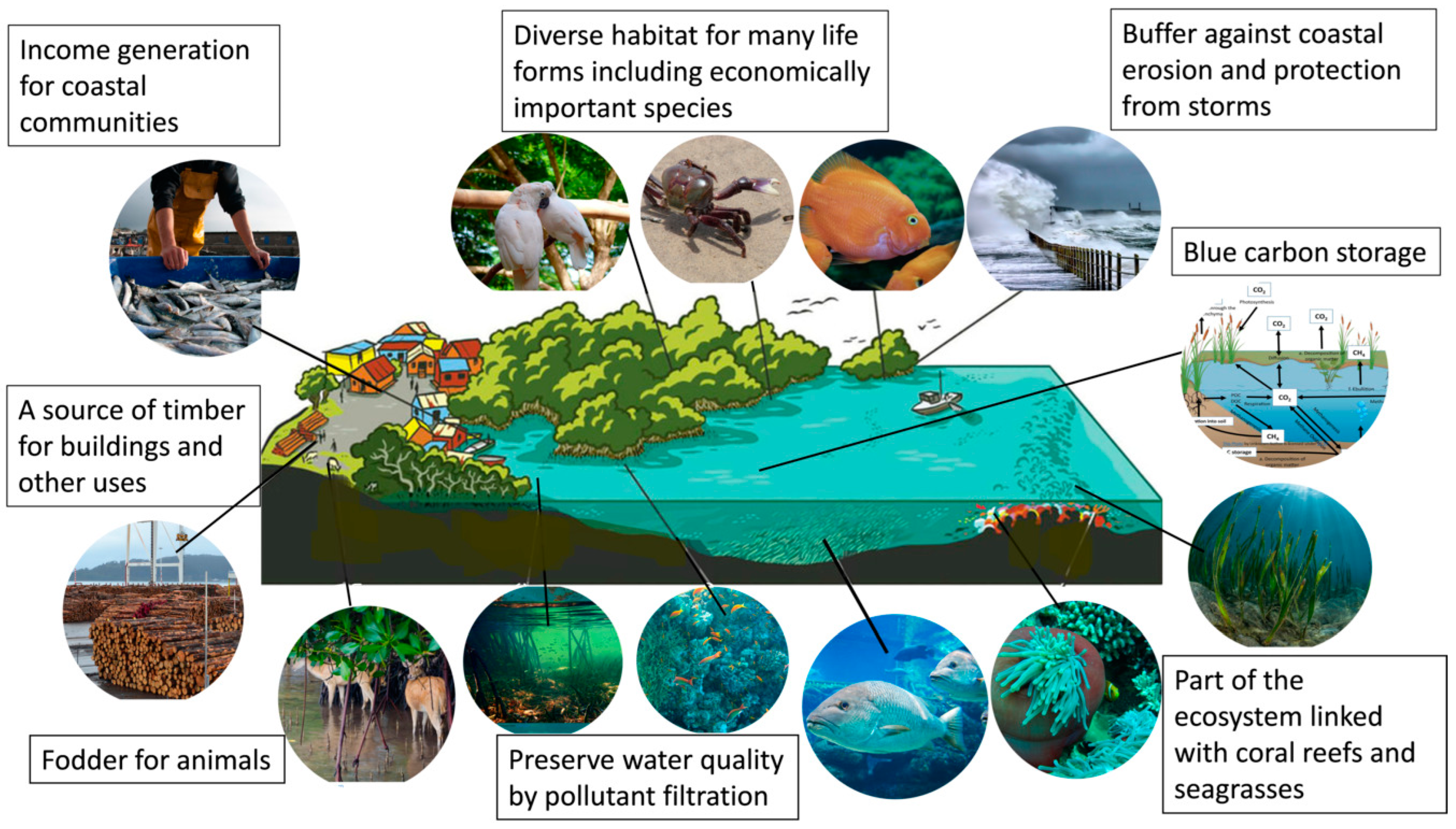
Key Insights
- Mangroves with richer species diversity, such as the Sundarbans and Gulf of Kutch, store more carbon and stabilize coasts better.
- Crabs and molluscs play a major role in nutrient cycling and sediment movement, helping mangroves keep pace with rising seas.
- There is a major research gap: few studies measure how biodiversity loss reduces these services.
- Conservation must focus on species diversity, not just expanding mangrove area.
Relevance for India: India’s 4,900 sq km of mangroves are vital for climate resilience, fisheries, and coastal safety. Protecting biodiversity supports national commitments under SDG 13 and SDG 15.
UPSC Prelims Practice Question
Which of the following is correct about mangrove ecosystems?
(a) Their ecosystem services are independent of species diversity.
(b) Crabs and molluscs support sediment and nutrient processes in mangroves.
(c) Mangroves store carbon mainly due to tidal action alone.
Answer: (b)
Share This Story, Choose Your Platform!
Start Yours at Ajmal IAS – with Mentorship StrategyDisciplineClarityResults that Drives Success
Your dream deserves this moment — begin it here.