
Relevance: GS Paper III – Science & Technology & GS Paper II – Environment & Governance; Source: Nature Magazine; UN Environment Programme reports
Introduction
Climate change is altering weather patterns, sea levels and ecosystems, increasing risks to lives, livelihoods and infrastructure. In this evolving scenario, earth observations—the use of satellites, sensors and ground-based monitoring—are becoming critical tools for climate adaptation. A recent study (Nature 2025) outlines how these observations can enhance resilience by delivering timely, actionable information across scales and sectors.
What are Earth Observations (EO)?
Earth observations refer to the systematic collection of data about Earth’s physical, chemical and biological systems through:
- Satellites – orbiting sensors that monitor land, atmosphere and oceans.
- In-situ sensors – ground- or ocean-based stations that measure rainfall, temperature, soil moisture, etc.
- Unmanned systems – drones and aerial platforms for high-resolution local data.
Key terms to know:
- Remote sensing – collecting data from a distance (often via satellite).
- Climate adaptation – adjusting systems and behaviour to reduce risks from climate change.
- Resilience – the capacity of a system (community, economy, ecosystem) to absorb shock and recover.
How Earth Observations Work: Key Systems & Processes
|
Step |
What happens |
Example in practice |
| Data collection | Satellites (e.g., INSAT, Sentinel), sensors record parameters. | INSAT-3D satellite tracks rainfall over India. |
| Data processing & analytics | Raw data are processed to derive environmental indicators (soil moisture, vegetation index). | Soil moisture anomaly maps identify drought stress. |
| Integration & modelling | Data feed into models for forecasting events and scenarios. | Flood modelling uses rainfall and river data to issue forecasts. |
| Decision support | Outputs guide policy, early warning, infrastructure and planning. | Coastal states use erosion-mapping to set building codes. |
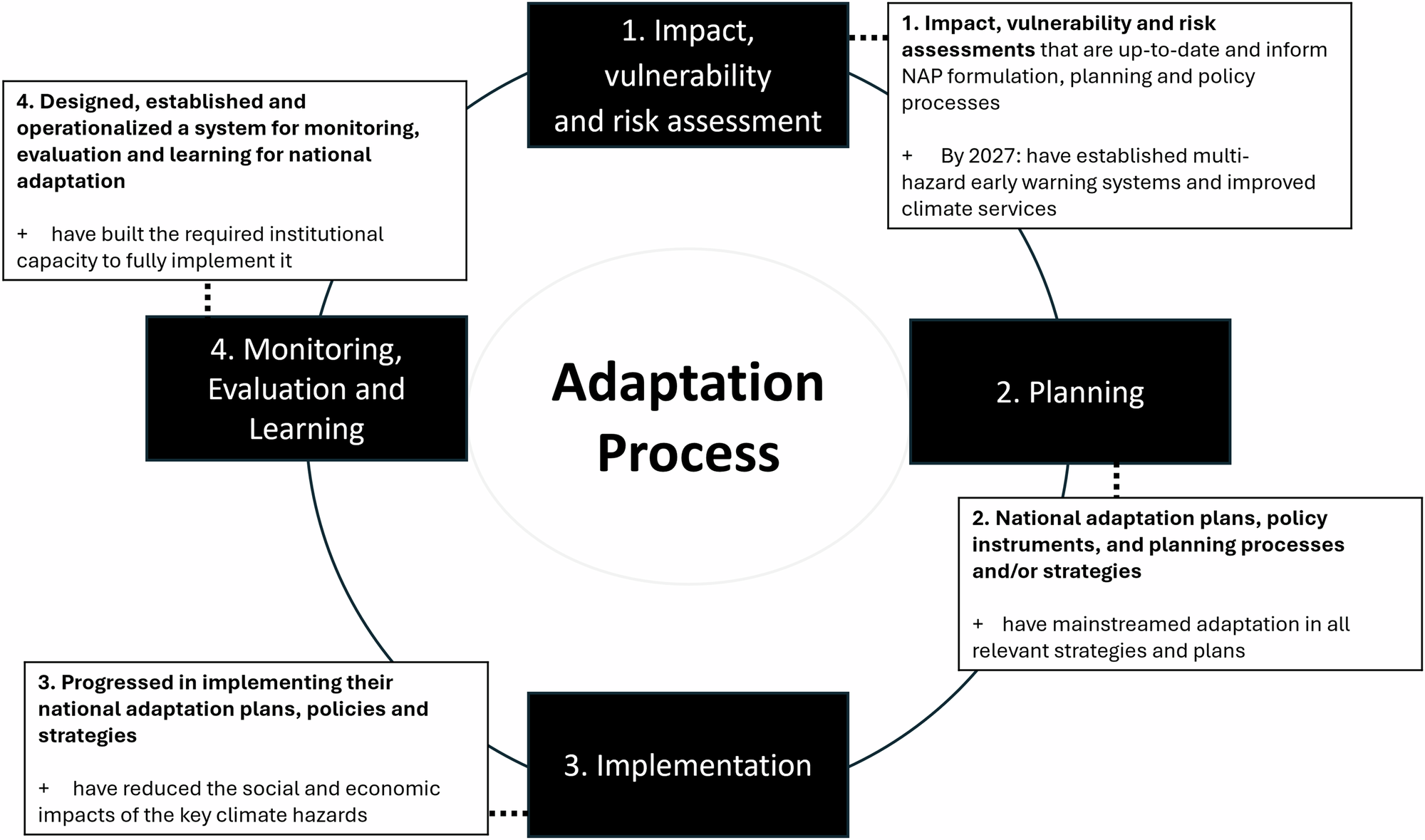
Why Earth Observations matter for adaptation
Earth observations make adaptation strategies more effective because they:
- Provide early warning of extreme events (cyclones, heat waves, floods).
- Map vulnerability hotspots (coastal erosion zones, drought-prone areas).
- Track ecosystem changes (glacier melt, deforestation, soil degradation).
- Inform infrastructure planning (flood defences, urban drainage, coastal zoning).
For example, India’s Indian National Centre for Ocean Information Services (INCOIS) uses satellite and buoy data to issue tsunami and cyclone alerts, giving communities more time to prepare.
India’s Framework & Way Ahead
India is strengthening EO systems through multiple initiatives:
- National Carbon Mission, National Hydrology Project, and National Disaster Management Authority all incorporate earth-observation data.
- The Ministry of Earth Sciences and ISRO jointly manage satellite programmes (such as the INSAT and Cartosat series).
- Emerging actions focus on real-time dashboards, high-resolution hazard maps, community-based sensor networks and open data access for decision makers.
Going forward, India must:
- Expand ground-truthing networks so satellite data reflect local realities, especially in remote regions.
- Build capacity at state and district levels to use EO data in planning and early warning.
- Promote public-private partnerships for sensor deployment and analytics (start-ups working on EO data services).
- Ensure equitable access to EO-derived information for vulnerable populations (small-holder farmers, coastal communities).
Key Takeaways
- Earth observations provide timely and precise data critical for climate adaptation across sectors.
- India, with its strong satellite infrastructure, is well-placed to lead in using EO for resilience.
- The challenge lies in data-to-decision translation: localising data, strengthening institutions and ensuring Inclusive reach.
One-line wrap: Earth observations turn climate uncertainty into actionable insight — equipping societies to adapt, respond and rebuild with resilience.
UPSC Mains Question:
“Examine the role of earth-observation systems in advancing climate adaptation in India. What institutional and policy reforms are required to maximise their impact?”
Share This Story, Choose Your Platform!
Start Yours at Ajmal IAS – with Mentorship StrategyDisciplineClarityResults that Drives Success
Your dream deserves this moment — begin it here.