

Syllabus: GS– II & V: Education
Why in the News?
The Assamese language was granted Classical Language status in 2024, renewing debate on its role in higher education and knowledge creation in Assam.
A Historic Opportunity
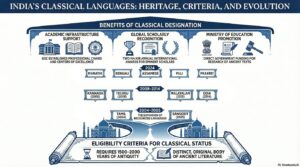
The recognition of Assamese as a Classical Language of India places it alongside Tamil and Sanskrit, acknowledging its antiquity, literary richness and independent tradition. This status is not merely symbolic; it opens avenues for central funding, research chairs, and academic development.
Higher education is not only about degrees but about shaping critical thinking and innovation. Research across the world shows that students understand complex ideas better in their mother tongue. When learning occurs in a familiar linguistic environment, comprehension deepens and creativity improves.
Why Assamese in Higher Education Matters
- Cognitive Advantage: Learning advanced subjects in one’s mother tongue improves clarity and retention.
- Cultural Continuity: Assamese literature—from the Charyapada to the works of Srimanta Sankardev—shows philosophical depth and intellectual tradition.
- Social Equity: English-centric education often creates urban-rural divides. Mother-tongue instruction can reduce dropout rates and democratize access.
- Alignment with Policy: The National Education Policy 2020 encourages regional languages as mediums of instruction in higher education.
- Economic Growth: Countries like Japan and Germany progressed using native languages in technical education. A similar approach can strengthen Assam’s agriculture, tea industry, and disaster management sectors.
Key Concepts Explained
- Classical Language Status: Granted by the Government of India to languages with ancient origins and rich literature; it enables dedicated research funding.
- Mother-Tongue Instruction: Education delivered in a learner’s first language for better conceptual understanding.
- National Education Policy 2020: A policy framework promoting multilingual education and regional language development.
- Linguistic Equity: Equal access to knowledge irrespective of language background.
- Intellectual Sovereignty: The ability of a society to produce knowledge rooted in its own culture and context.
Challenges
- Shortage of technical textbooks in Assamese.
- Lack of standardized terminology in science and technology.
- Need for faculty training and digital content creation.
Way Forward
These can be addressed by:
- Establishing translation cells in universities.
- Creating a State Language Commission for technical vocabulary.
- Encouraging bilingual research theses.
- Digitizing manuscripts under initiatives like Digital India.
Conclusion
The promotion of Assamese in higher education is not about rejecting English; it is about building a confident bilingual system. It ensures that education becomes inclusive, rooted and globally relevant. If implemented wisely, it can make Assam a model of culturally grounded yet modern education.
Exam Hook
Key Takeaways:
- Classical language status strengthens cultural and academic recognition.
- Mother-tongue education enhances cognitive development and social equity.
- National Education Policy 2020 supports multilingual higher education.
Mains Question:
“Discuss the role of regional languages in promoting inclusive and knowledge-based development in India. Examine the context of Assamese language after its recognition as a Classical Language.”
One-line Wrap:
Integrating Assamese into higher education can transform cultural pride into intellectual power and inclusive development.
Share This Story, Choose Your Platform!
Start Yours at Ajmal IAS – with Mentorship StrategyDisciplineClarityResults that Drives Success
Your dream deserves this moment — begin it here.