
Syllabus: GS-III: Climate Change
Why in the News?
A major proposal to establish a Climate Change Research Centre for the Indian Himalayan Region (IHR) in the North East has emerged from the Indian Himalayan Region Climate Change Conclave held in Imphal, Manipur.
More About the News
The two-day conclave, organized under the aegis of the Manipur Directorate of Environment and Climate Change (DoECC), brought together scientists, policymakers, and administrators under the theme — “Perspectives of Research, Practice, Policy, and Communication.”
Eminent climate scientist Dr. N.H. Ravindranath (Retd., IISc Bengaluru) called for setting up a dedicated regional research centre to address climate vulnerabilities unique to the Himalayas. He emphasized the need for increased financing for climate research, modelling, and adaptation planning, highlighting that the 12 Himalayan states, including those in the North East, are highly vulnerable to climate-induced disasters.
Manipur Governor, in his valedictory remarks, supported the proposal, stating that Manipur could take the initiative in establishing such a research centre, which would serve as a hub for scientific research and policy integration across the IHR.
Background: The Indian Himalayan Region and Climate Challenges
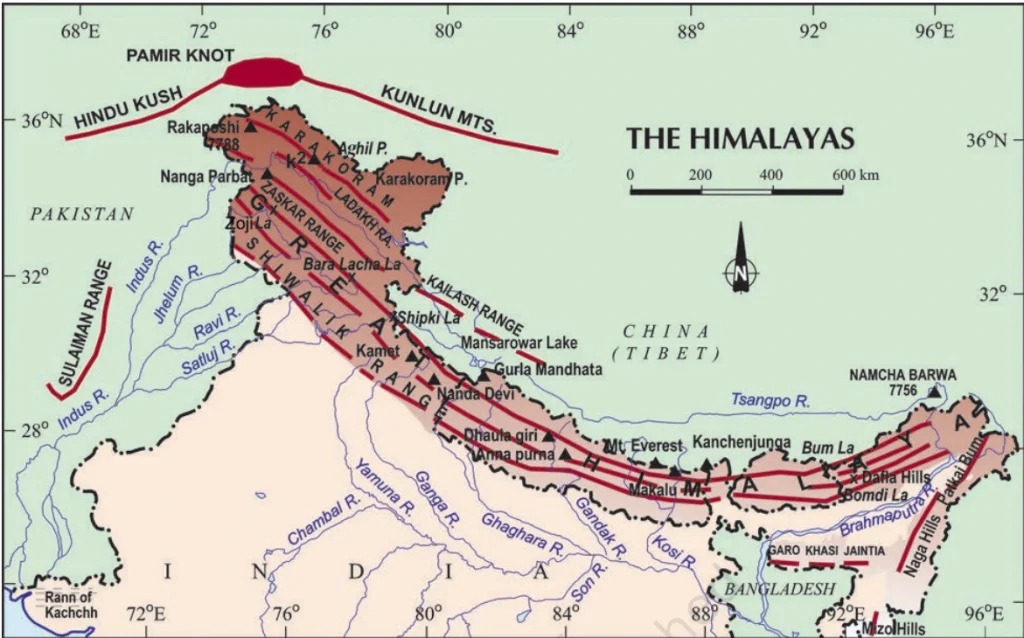
The Indian Himalayan Region (IHR) spans over 2,500 km, covering 12 states and two union territories, and supports nearly 50 million people. It serves as a water tower for South Asia, feeding major rivers such as the Ganga, Brahmaputra, and Indus.
However, the region faces severe climate threats, including:
- Rapid glacier retreat (Himalayan glaciers are receding at 10–60 meters annually).
- Landslides, floods, and erosion due to erratic monsoon patterns.
- Biodiversity loss and shrinking forest cover.
- Agricultural distress from changing precipitation and temperature patterns.
Recent studies by ICIMOD (2023) and WMO (2024) indicate that the Eastern Himalayas — including Arunachal Pradesh, Nagaland, Manipur, and Mizoram — are warming faster than the global average.
The Intergovernmental Panel on Climate Change (IPCC, AR6) identifies the Himalayas as one of the world’s most climate-vulnerable ecosystems, affecting both ecological integrity and livelihood security.
Need for a Regional Climate Change Research Centre
- Localized Climate Research and Modelling: The Himalayas are diverse, with regional variations in altitude, rainfall, and land use. A centralised national approach cannot adequately address microclimatic and ecological variations in the North Eastern Himalayas.
- Bridging Research and Policy Gaps: There is a lack of region-specific data to guide adaptation policies. The proposed centre would integrate scientific data, traditional knowledge, and field-based solutions for sustainable adaptation strategies.
- Monitoring Critical Ecosystems: A research centre in the North East can continuously monitor fragile ecosystems such as Loktak Lake, Yaral Pat, and Utra Pat, where wetland degradation and invasive species threaten biodiversity.
- Disaster Risk Reduction: Climate-induced hazards such as landslides, glacial lake outburst floods (GLOFs), and soil erosion are intensifying. The centre can develop early warning systems using satellite and remote sensing data.
- Socio-Economic Relevance: Millions of people in the North East depend on agriculture, forests, and water systems vulnerable to climate change. The centre can promote community-based adaptation and livelihood resilience through capacity building.
Existing Efforts and Institutional Framework
- National Mission for Sustaining the Himalayan Ecosystem (NMSHE) – under NAPCC, focuses on conserving biodiversity and traditional knowledge systems.
- Indian Himalayas Climate Adaptation Programme (IHCAP) – joint Indo-Swiss initiative supporting climate data infrastructure.
- State Action Plans on Climate Change (SAPCC) – all 12 Himalayan states, including Manipur, have prepared SAPCCs, though implementation is uneven.
- Indian Network for Climate Change Assessment (INCCA) – facilitates research on regional climate variability.
Despite these, there is no dedicated, region-specific research institution for the Eastern Himalayan and North Eastern states, making this proposal timely and strategic.
Examples of Climate Resilience in Manipur
- Wetland Restoration: Conserving five major wetlands — Yaral Pat, Utra Pat, Zaimeng Lake, Waithou-Pumlen-Koidum Pat, and Loktak Lake — using nature-based solutions.
- Community Integration: Pilot projects integrating traditional knowledge and community participation in forest and wetland management.
- Biodiversity Research: Institute of Bioresources and Sustainable Development (IBSD) promotes sustainable bioprospecting and conservation of genetic resources.
Way Forward
- Establishment of the North East Climate Research Centre (NECRC): Centralized, multi-disciplinary institution for data collection, modelling, and policy research; could function under a consortium model integrating universities, ICIMOD, MoEFCC, and NESAC.
- Enhanced Climate Financing and Infrastructure: Increase funding for R&D, field stations, and climate laboratories; leverage Green Climate Fund (GCF) and Adaptation Fund.
- Promotion of Nature-Based and Community-Led Solutions: Encourage eco-restoration, agroforestry, and wetland-based carbon sequestration practices.
- Data Integration and Knowledge Exchange: Establish a Himalayan Data Portal combining climate, biodiversity, and hydrological information.
- Capacity Building and Youth Involvement: Integrate climate education into universities and promote youth-led research and innovation.
Conclusion
The proposal for a Climate Change Research Centre in the North East Himalayan region is a visionary step toward building scientific, institutional, and community resilience in one of the world’s most fragile ecosystems. Establishing such a centre will strengthen regional adaptation capacities and enhance India’s leadership in mountain ecology research, climate modelling, and sustainable development — aligning with national commitments under the Paris Agreement and SDG-13 (Climate Action).
Mains Practice Questions
“The Eastern Himalayas represent both ecological wealth and climatic vulnerability.” Discuss the need and significance of a regional climate change research centre in the North East.



Start Yours at Ajmal IAS – with Mentorship StrategyDisciplineClarityResults that Drives Success
Your dream deserves this moment — begin it here.