
Syllabus: GS-III: Green economy, circular economy
Why in the News? The NER Chapter of the PHD Chamber of Commerce and Industry (PHDCCI), in collaboration with the Assam State Space Application Centre (ASSAC), recently organized a seminar on “Empowering Assam’s Biofuel Sector through Remote Sensing Technologies.”
More About the News
The event was supported by the Assam Science, Technology and Environment Council (ASTEC) and NABARD. It underscored Assam’s vast potential in biofuel production using advanced technologies such as satellite-based biomass mapping and geospatial resource assessment.
Experts highlighted that Assam—rich in biomass, bamboo, and forest resources—could become a leader in India’s emerging bio-economy, aligning with the state’s BioE3 Policy (Energy, Environment, Economy) and India’s national goal of green growth and energy security.
What is Bio-Economy?
The bio-economy refers to an economy that utilizes renewable biological resources—such as crops, forests, livestock, and microorganisms—to produce food, materials, energy, and industrial products sustainably.
It integrates biotechnology, agriculture, energy, environment, and industrial policy to reduce dependence on fossil fuels, promote rural employment, and achieve low-carbon economic growth.
According to the Department of Biotechnology (DBT), India’s bio-economy is driven by biopharmaceuticals (vaccines, biosimilars), bio-agriculture (GM crops, biofertilizers), bioenergy (biofuels, biogas), and biotechnology research.
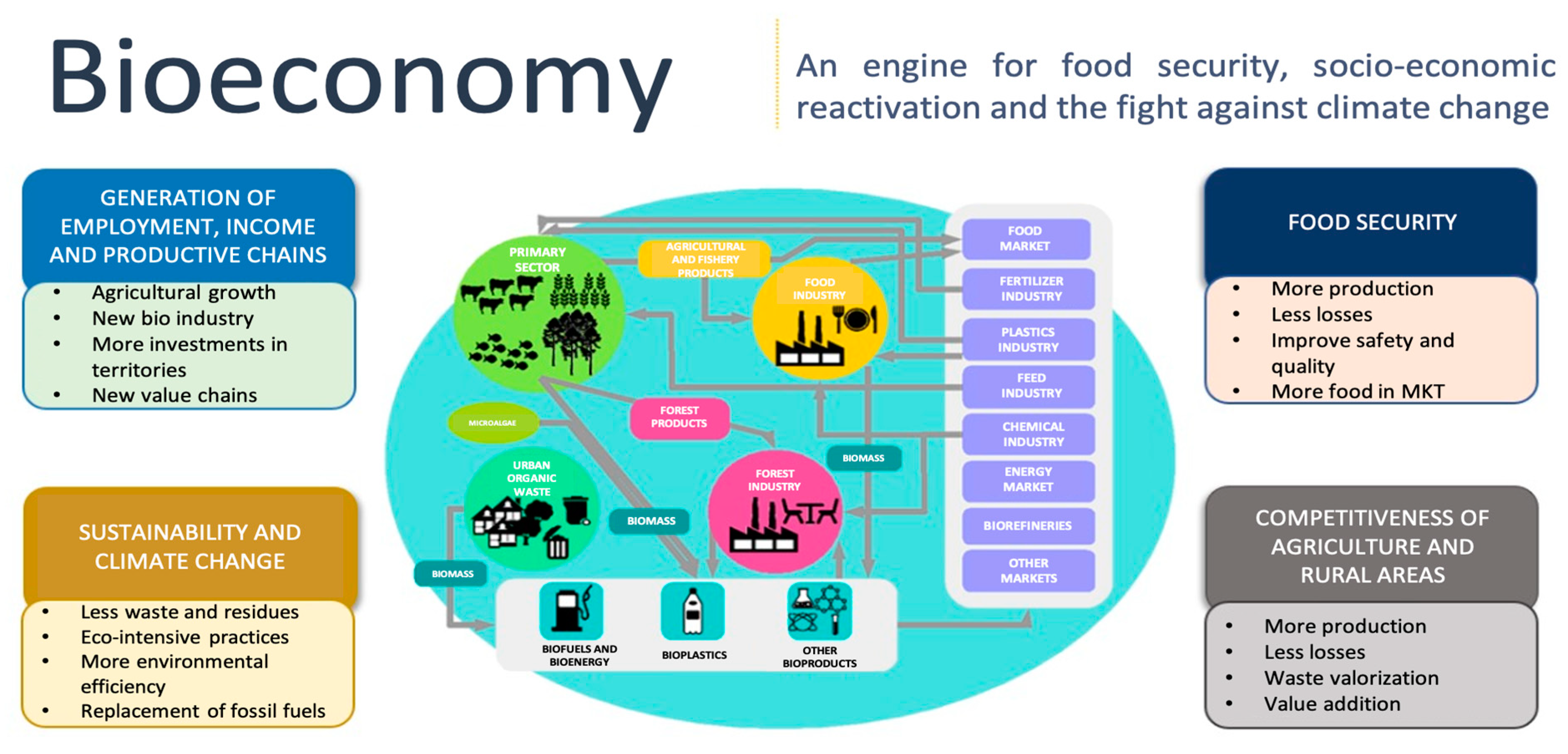
Status of India’s Bio-Economy
- Valuation: US$ 165.7 billion in 2024; projected US$ 300 billion by 2030 (~4% of GDP).
- Bio-energy: ~10% of renewable energy capacity, driven by ethanol blending, biogas, biodiesel.
- India: 3rd-largest ethanol producer; 12% blending rate in 2023.
- Support: National Biofuel Policy (2018), GOBAR-DHAN Scheme.
- Start-ups: Over 3,000 biotech start-ups, expected to reach 10,000 by 2025.
Status of Assam in the Bio-Economy
- Abundant biomass, bamboo, forest resources, and agro-waste for biofuel.
- BioE3 Policy: integrates Energy, Environment, Economy; emphasizes circular economy models.
- Biotech hubs: Guwahati Biotech Park, NIPER Guwahati, ASTEC.
- NABARD bamboo cultivation projects and ASSAC/NESAC remote sensing for biomass hotspots.
Potential of Assam in the Bio-Economy
- Abundant Biomass and Forest Cover: 35% forest cover; crop residues like rice husk, sugarcane, bamboo, mustard straw.
- Bamboo-Based Biofuel & Bio-Products: >50 species of bamboo for 2G ethanol, bioplastics.
- Geospatial Mapping & Remote Sensing: satellite imagery, GIS modeling for supply chains & carbon monitoring.
- Integration with Agri-Value Chains: tea, sugarcane, rice residues → bio-ethanol, biogas, organic fertilizers.
- Youth Employment & Green Start-ups: BioE3 incentives for bio-based entrepreneurship.
Significance of Bio-Economy for India
- Energy Security & Green Transition: reduces oil imports, supports Atmanirbhar Bharat & net-zero 2070.
- Rural Empowerment & Livelihoods: bio-refineries & decentralized energy generation.
- Waste-to-Wealth & Circular Economy: efficient agricultural & municipal waste utilization.
- Climate Change Mitigation: carbon sequestration, reduced methane emissions.
- Research & Innovation Ecosystem: academia-industry-government collaboration.
Hurdles in the Development of India’s Bio-Economy
- Regulatory overlap & fragmentation across ministries.
- Supply chain & technology adoption inefficiencies.
- IPR & bio-resource law overlaps.
- Bio-piracy & ethical concerns.
- Research gaps & low private investment (1% global R&D).
Policies and Schemes Promoting the Bio-Economy
- Assam BioE3 Policy (2024): Integrates bio-energy, environment, economy for green growth.
- National Policy on Biofuels (2018): Ethanol blending, advanced biofuels, waste-to-energy plants.
- National Biopharma Mission: Strengthens vaccine & biosimilar infrastructure.
- BRIED Scheme: Supports biotech start-ups & incubation.
- Genome India Project: Decodes genetic diversity for bio-health & agri-biotech.
- Bio-KISAN Scheme: Farmer-oriented bio-technologies & climate-smart agriculture.
Way Forward
- Strengthen inter-departmental coordination: National Bio-Economy Council.
- Leverage space technology: institutionalize remote sensing biomass monitoring.
- Promote bio-clusters & start-up hubs: expand Guwahati Biotech Park model.
- Legal harmonization & IPR clarity.
- Encourage PPPs for bio-refineries & waste-to-energy plants.
- Capacity building & farmer awareness through KVKs & Skill India.
Conclusion
Assam’s bio-economy offers economic opportunity & environmental responsibility. With remote sensing, biotech, and policy innovation, Assam can harness natural wealth for a green, self-reliant economy aligning with India’s energy transition & climate goals.
Mains Practice Questions
“Bio-economy can serve as the foundation of India’s green growth strategy.” Discuss with reference to Assam’s BioE3 Policy.



Start Yours at Ajmal IAS – with Mentorship StrategyDisciplineClarityResults that Drives Success
Your dream deserves this moment — begin it here.