
WhatsApp Channel Join Now
Telegram Group Join Now
1) What is Grand Ethiopian Renaissance Dam (GERD)?
- GERD is a very large hydropower dam on the Blue Nile in western Ethiopia (Benishangul-Gumuz region).
- Storage: about 74 billion cubic metres (BCM) of water.
- Power capacity: about 5,150 megawatts (MW) — the biggest hydropower project in Africa.
- Aim: give Ethiopia reliable electricity for homes, industry, and also allow power exports to neighbours.
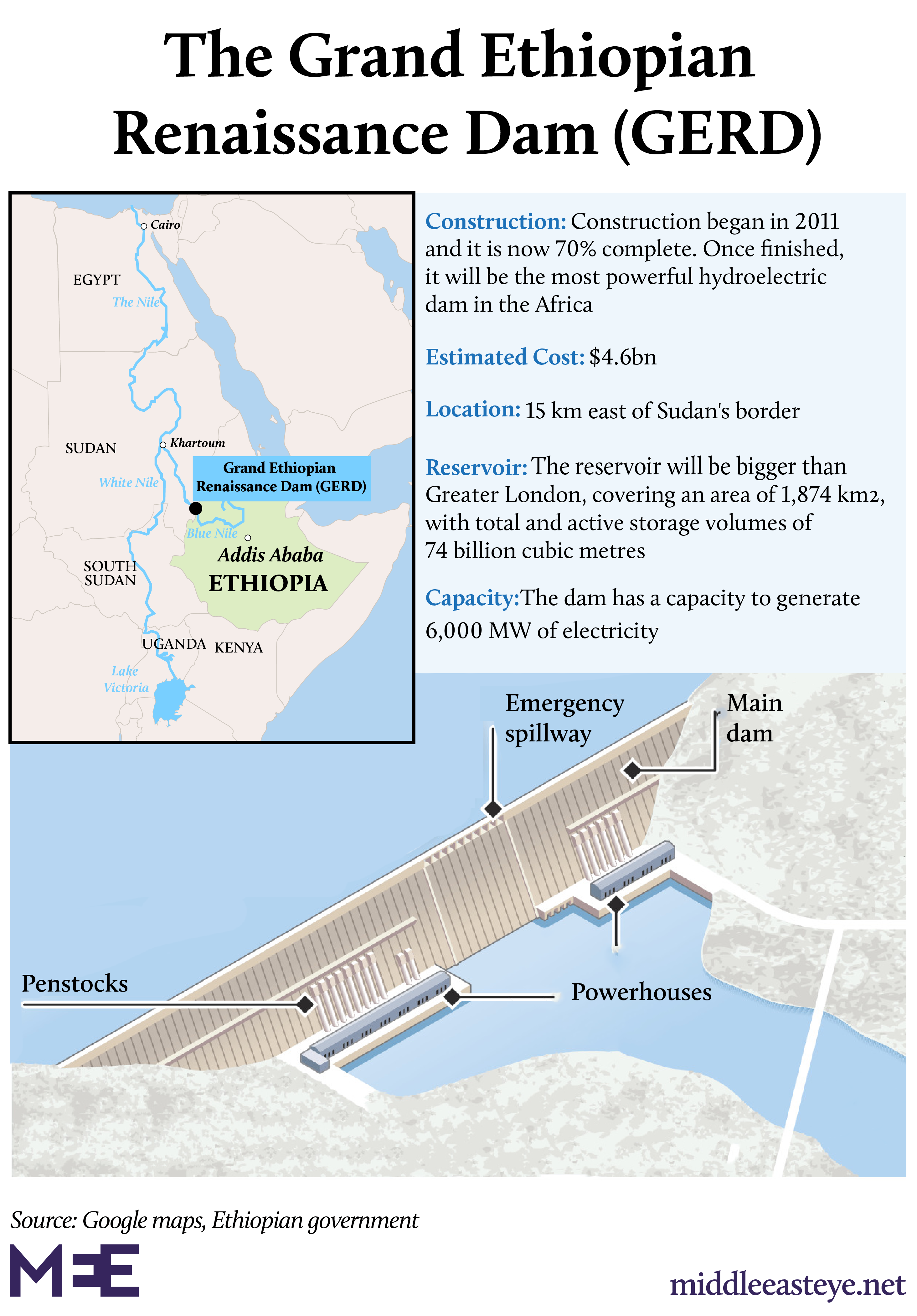
The Grand Ethiopian Renaissance Dam (GERD)
2) Why it is in the news
- Ethiopia has been filling the reservoir in stages and adding turbines.
- The project is now generating more power, so the government is showcasing it as a national milestone.
- At the same time, Egypt and Sudan say they need clear, legally binding rules on how much water Ethiopia will store and release, especially during drought.
3) Why Egypt and Sudan worry
- Both countries lie downstream on the Nile. Egypt gets almost all its freshwater from the Nile; Sudan also depends on it for farms and cities.
- Their concern is straightforward: if Ethiopia stores too much water too quickly or does not share data in dry years, river flows could drop, affecting crops, drinking water, and power from Aswan High Dam (Egypt) and dams in Sudan.
4) What Ethiopia gains (and possible regional benefits)
- Clean electricity at scale for a country with low per-person power use.
- Cheaper power helps factories, jobs, and services.
- If run with good coordination, the dam can smooth floods and reduce silt downstream, which can also help Sudan and Egypt.
- Power exports can bring foreign exchange and support regional grids.
5) What exactly is the dispute about
- Filling plan: How fast Ethiopia fills the reservoir, year by year—especially in drought.
- Operating rules: Minimum annual releases, real-time data sharing, and emergency steps in multi-year drought.
- Legal shape: Egypt and Sudan want a binding treaty with clear enforcement; Ethiopia prefers flexible, non-restrictive terms, saying it has a sovereign right to develop its water.
Key terms, quickly
- BCM: billion cubic metres (big unit for water).
- MW: megawatt (unit of power).
- Riparian: country sharing a river (Ethiopia, Sudan, Egypt).
- Filling vs operation: Filling is the one-time build-up of water; operation is the daily/seasonal releases after that.
6) What to watch next
- Talks under the African Union: Do the three countries agree on drought-year rules, data sharing, and dispute settlement?
- Power ramp-up: How quickly Ethiopia connects turbines and transmission lines to deliver power to homes and industries.
- Drought management plan: A clear, predictable formula for bad rainfall years (who adjusts how much, and when).
- Confidence-building: Regular joint data bulletins, flood/drought drills, and independent monitoring to reduce mistrust.
One-line wrap: GERD can light up Ethiopia and help the region—if there is a fair, drought-proof water-sharing plan that protects Sudan and Egypt downstream.



Start Yours at Ajmal IAS – with Mentorship StrategyDisciplineClarityResults that Drives Success
Your dream deserves this moment — begin it here.