
1) What it is and why it appears in the news
- An amoeba is a microscopic, single-celled eukaryotic organism known for its ability to alter its shape.
- The word amoeba comes from the Greek word amoibe, meaning “change”.
- Amoebae are found across diverse environments, including freshwater, saltwater, and moist soil.
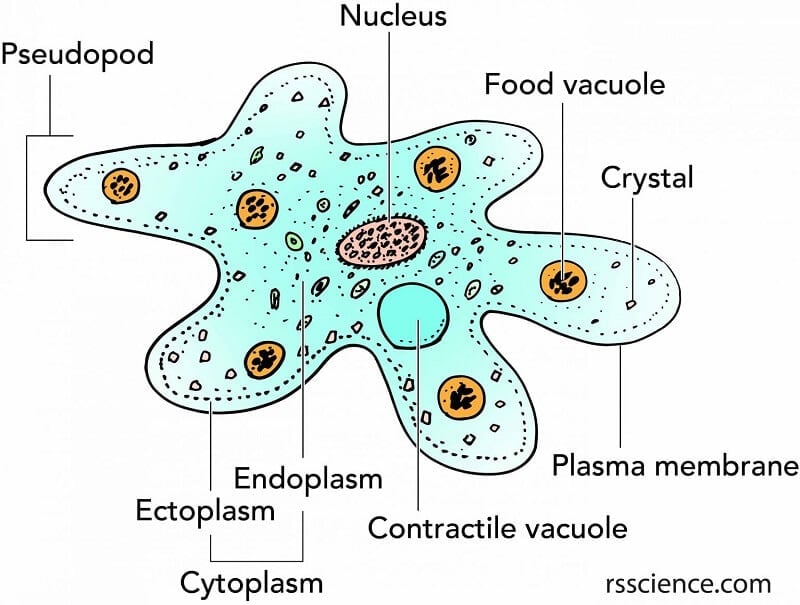
Amoeba Structure
2) How infection happens and common risk situations
Infection occurs when water enters forcefully through the nose. From the nose, the amoeba can travel along the olfactory nerve to the brain. You do not get this by drinking water.
Situations with higher risk
- Diving/jumping into warm ponds, lakes, canals; water shoots up the nose
- Playing in shallow, muddy areas and stirring up the bottom silt
- Poorly chlorinated pools or untreated water parks
- Nasal rinsing (neti pot) with tap/untreated water
Usually not a risk
- Sea (saltwater) exposure
- Drinking the water (stomach acid generally kills it)
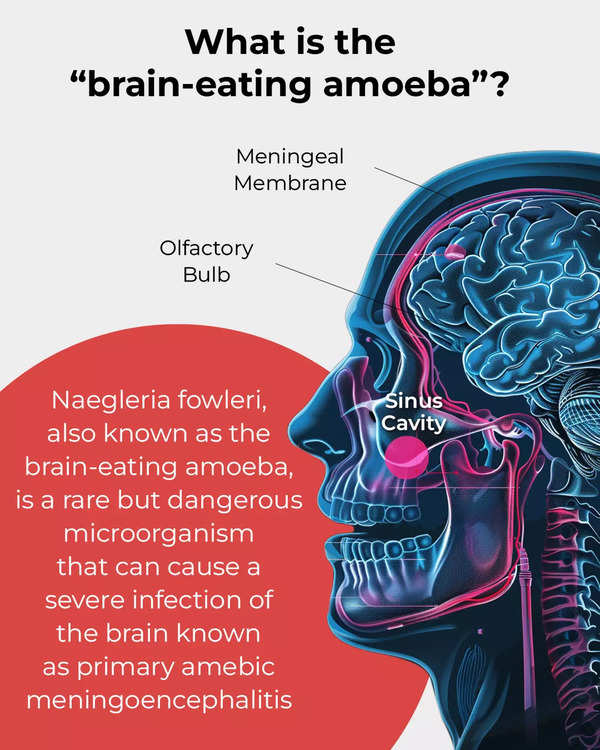
Mechanism to enter the Brain
3) Symptoms, timeline, and when to seek help
Symptoms: usually start 1–12 days after exposure and worsen quickly.
Typical pattern
- Early: high fever, severe headache, nausea/vomiting
- Then: stiff neck, confusion, sleepiness, seizures, loss of balance; can progress to coma
What to do
If such symptoms appear after warm-freshwater exposure to the nose, go to emergency care immediately and tell the doctor about the exposure so they consider Primary Amebic Meningoencephalitis (PAM) early.
4) Prevention — simple rules that work
Think: keep warm freshwater out of the nose and keep pools clean.
- In ponds/lakes/canals: avoid diving, pinch your nose or use nose clips; keep head above water
- Prefer cleaner, deeper, flowing water; avoid stagnant, shallow, muddy spots
- Pools: ensure proper chlorination and filtration (free chlorine typically 1–3 ppm)
- Neti pot / nasal rinse: only distilled, boiled-and-cooled, or properly filtered water (≤0.2-micron or certified equivalent). Never plain tap water
- After water play: shower and blow your nose gently; avoid forcing water up the nose
5) Treatment and myths vs facts
Treatment (doctor’s domain): combinations like amphotericin B, miltefosine, azithromycin, rifampin, fluconazole, plus intensive care (sometimes body cooling). Even with aggressive therapy, fatality is high; prevention and early suspicion matter most.
Myths vs facts
- Myth: Drinking contaminated water is the main cause → Fact: Nasal entry is the route
- Myth: All swimming is unsafe in summer → Fact: Properly chlorinated pools and safe practices lower risk
- Myth: It spreads person-to-person → Fact: No person-to-person spread is known
Remember: Risk is rare, but acting fast on symptoms after nose exposure to warm freshwater can save crucial time.
6) Exam corner
Glossary
- Naegleria fowleri: Amoeba in warm freshwater; causes PAM
- PAM: Primary Amebic Meningoencephalitis—rapid, severe brain infection
- Residual (free) chlorine: Active chlorine in pools that kills germs; must be maintained
- Safe nasal irrigation: Distilled/boiled-cooled/filtered water only
Prelims MCQ
With reference to Naegleria fowleri, which statements are correct?
- Usual infection route is contaminated freshwater entering through the nose.
- Drinking contaminated water is the commonest cause.
- Proper pool chlorination reduces risk.
- Using plain tap water for nasal rinsing is safe if it is clear.
Choose:
A. 1 and 3 only
B. 1 and 2 only
C. 2 and 4 only
D. 1, 3 and 4 only
Answer: A (1 and 3 only).
One-line wrap: Risk is rare but serious—keep warm freshwater out of your nose, keep pools well chlorinated, and use safe water for nasal rinsing.



Start Yours at Ajmal IAS – with Mentorship StrategyDisciplineClarityResults that Drives Success
Your dream deserves this moment — begin it here.